Prepare a Solana wallet
Install a reputable wallet only from its official source. Back up the recovery phrase offline, never paste it into a website and consider using a separate wallet for speculative tokens.
Solama Coin (SOLAMA) is a community-driven meme token built on Solana. Its brand is the llama mascot; its technical identity is the mint address. This guide separates verifiable token facts from project statements, market data and speculation.
AVLhah…SazqrVerify the complete address
Solama Coin is a meme token issued on the Solana blockchain under the ticker SOLAMA. The project describes it as the “official unofficial mascot of Solana” and positions the token around community participation, memes and ecosystem identity rather than a separate blockchain, protocol or revenue-producing business.
The practical distinction is important: “Solama Coin” is a brand name, while the mint account is the on-chain identifier. Names, tickers and artwork can be copied by unrelated tokens. A wallet or exchange interface showing the word SOLAMA is therefore not sufficient proof that it has selected the intended asset.
Useful research starts with identity and only then moves to investment questions. Verifying the correct mint can reduce one category of operational error, but it does not establish fair value, deep liquidity, decentralisation, future demand, competent project management or safety. Those questions require separate evidence.
This page is designed as an entity overview, not a price prediction. It explains what can be checked, what remains uncertain, how users typically access the token and which risks still exist after the correct token has been identified.
Stable identity data is separated from volatile market data. Project statements are attributed to the project; market values are treated as dated observations rather than permanent facts.
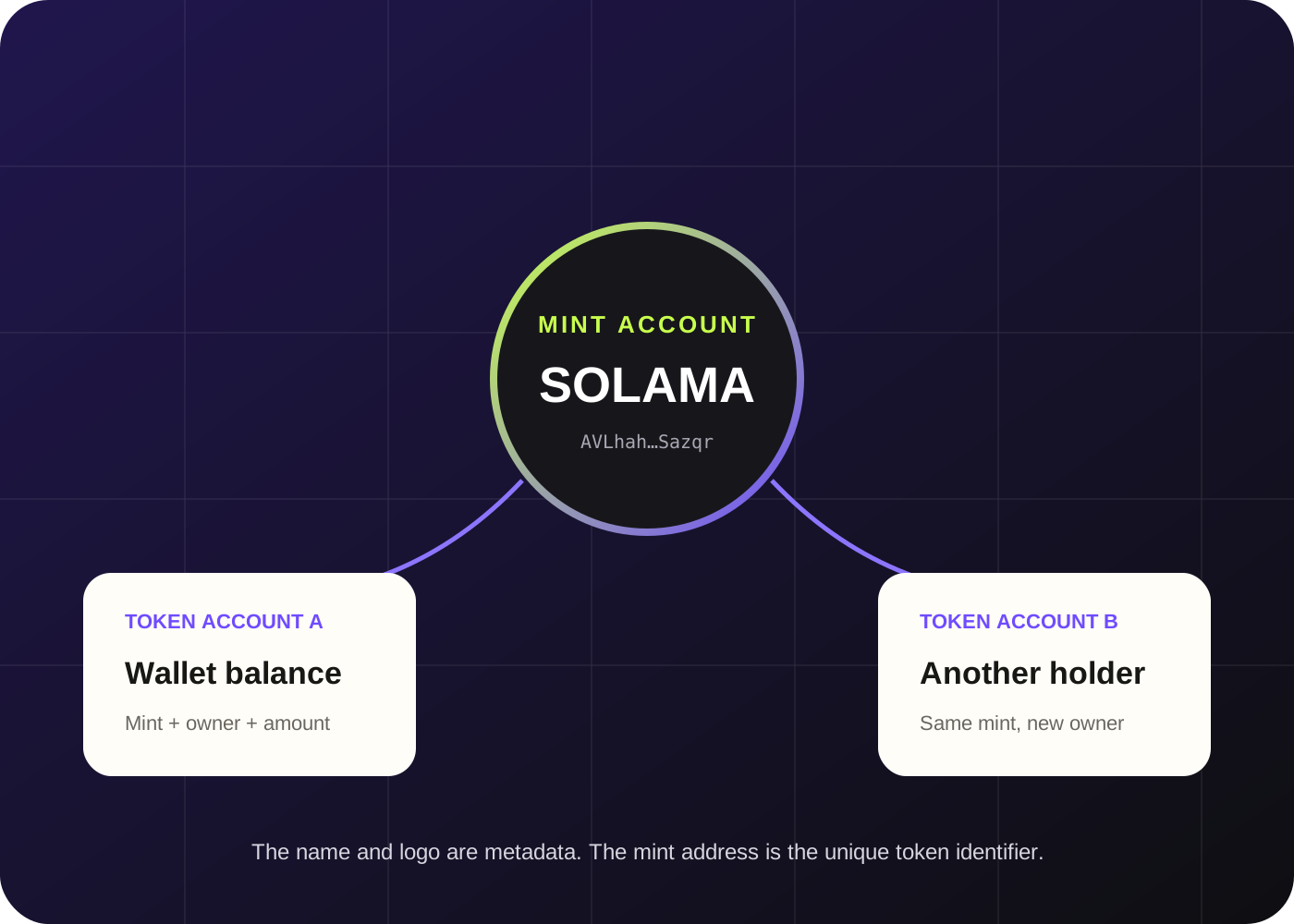
Solana token programs provide the standard logic used to create, hold and transfer fungible tokens. A mint account represents one specific token and stores global information such as the supply, decimal precision and authority settings. Individual wallet balances live in token accounts associated with that mint.
This structure is why the mint address matters more than the visible brand. A ticker is a human-readable label and does not need to be unique. The same ticker can appear on multiple unrelated assets, while the full mint address points to one specific token account on Solana.
Transfers and swaps settle through Solana. Network fees are paid in SOL, not SOLAMA. A user can therefore own the intended token and still be unable to move it until the wallet has enough SOL for transaction fees. Wallet, token and network balances should be understood as separate pieces of the same transaction flow.
Metadata can help an interface display a name, symbol and image, but metadata should not be mistaken for identity. For verification, the practical hierarchy is: full mint address first, trusted source second, interface labels third.
The project has displayed 676,602,254 SOLAMA and also referenced an original total supply of 690,420,000. Supply helps explain how many units exist and provides context for the unit price, but a large number of tokens does not make an asset cheap and a small number does not make it expensive. Valuation depends on price, circulating supply assumptions, liquidity, demand and the ability to execute trades near the quoted price.
Circulating-supply labels can differ between the project, explorers and market aggregators because each source may apply different methodology. A useful review records which figure came from which source and when it was checked rather than combining numbers as though they were interchangeable.
The project states that SOLAMA has 0% buy and sell tax. That is a statement about the token’s tax model. A user may still face Solana network fees, swap fees, spread, price impact, slippage and exchange withdrawal charges. Those costs are created by the route, market and platform even when the token itself does not impose a stated transfer tax.
Before signing, the relevant number is not merely the quoted exchange rate. It is the minimum amount expected after fees and slippage. On a centralized exchange, the equivalent calculation also includes trading fees, withdrawal limits and the price available in the actual order book.
The project says liquidity-provider tokens were burned and contract ownership was renounced. Those statements can narrow specific control risks, but they should not be treated as a general safety certificate. Liquidity can remain shallow, holder distribution can be concentrated, external platforms can fail and social demand can disappear.
On-chain claims should be checked against the exact mint and relevant accounts, not inferred from a logo or announcement. Even when a claim is technically accurate, its significance depends on what authority existed, which pool was involved and whether other concentrated positions remain.
A visually convincing token can still be the wrong asset. Use the same verification sequence every time rather than relying on memory or a shortened address.
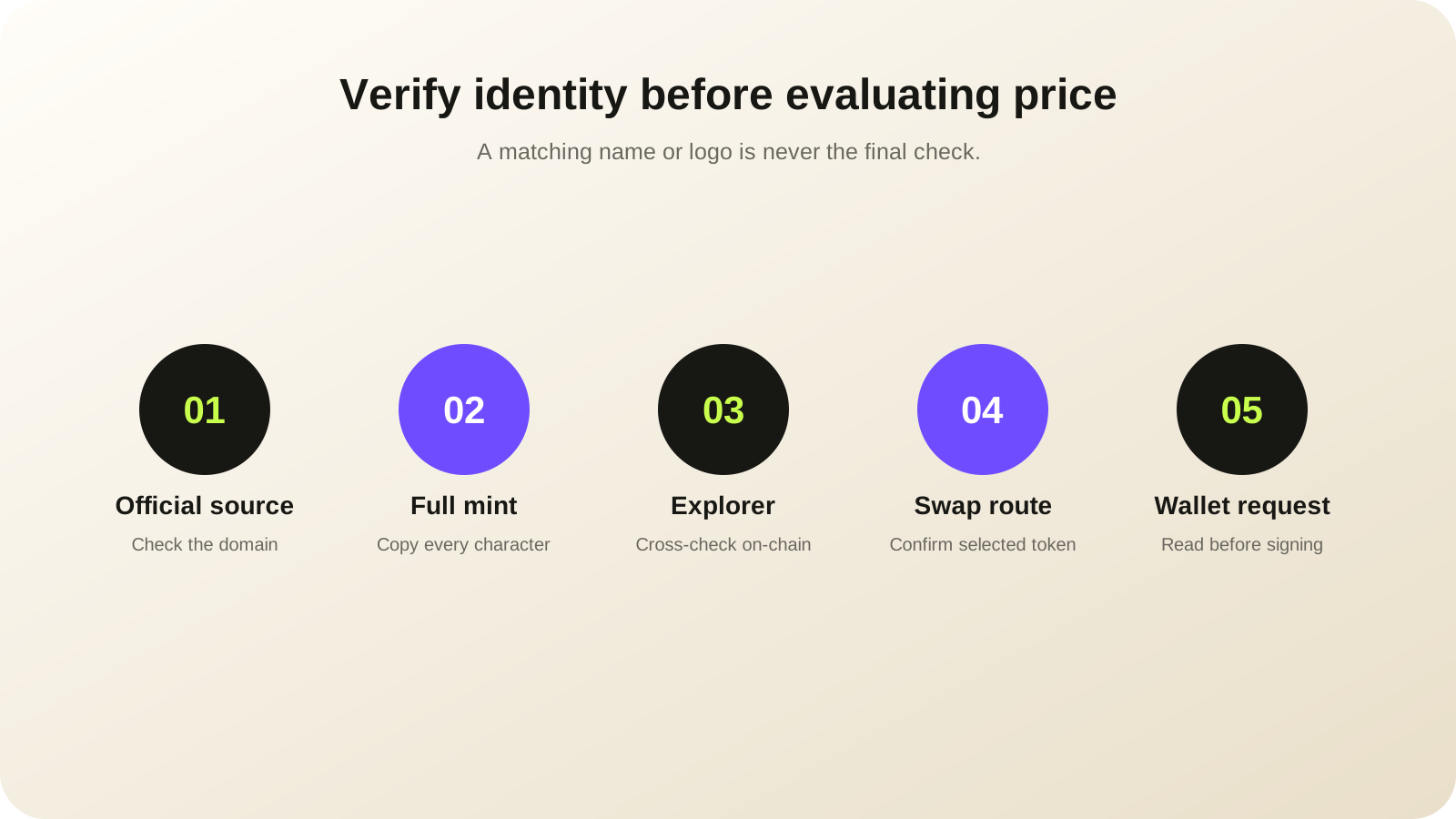
Type or open the project URL from a trusted bookmark. Avoid obtaining the address from an advertisement, direct message, screenshot, copied social profile or unverified token list. A phishing page can reproduce the original design while substituting a different mint or transaction request.
Use the complete address AVLhahDcDQ4m4vHM4ug63oh7xc8Jtk49Dm5hoe9Sazqr. Shortened forms are useful for a quick visual check but are not sufficient for final verification. Clipboard malware and look-alike strings are reasons to compare the address again after pasting.
Confirm that an explorer displays the same mint and review supply, authorities, metadata and holder information where available. The explorer is a second view of the on-chain record; it is not a guarantee that the project or market is safe.
Inspect the selected input and output tokens before approving a quote. A matching name, ticker or llama image is not proof. The interface should resolve to the exact mint address you verified.
Check the connected domain, requested permissions, route, price impact, minimum received and fees. Reject unexpected signature requests. A legitimate swap never needs the wallet’s recovery phrase or private key.
The mechanics are straightforward. The quality of the result depends on address verification, route selection, liquidity, custody and wallet discipline.
Install a reputable wallet only from its official source. Back up the recovery phrase offline, never paste it into a website and consider using a separate wallet for speculative tokens.
SOL is normally required both for the swap and for network fees. Keep a small reserve rather than committing the entire balance to the transaction.
Paste and verify the official SOLAMA mint address. Do not select the asset solely from a search result, trending list, logo or ticker.
Check the route, price impact, minimum received, fees and connected domain. Start with a small test transaction when practical.
A decentralized exchange route gives the user direct control of the wallet but places more responsibility on domain, mint and transaction verification. A centralized exchange can simplify the interface but introduces custody, account-access, listing, withdrawal, jurisdiction and counterparty risk. Neither route removes market or liquidity risk.
Read the detailed buying guideTwo interfaces can show different routes for the same trade. Compare minimum received, price impact, platform fees, route complexity and whether the quote uses several pools. A slightly better headline price is not automatically better if the minimum received is worse or the route introduces additional failure points.
Slippage tolerance is not a promise of execution quality. It is the amount of adverse movement the user permits before the transaction fails. Setting it too low can cause failure; setting it unnecessarily high can accept a much worse fill.
Confirm that the venue supports the intended SOLAMA market and the exact network for deposits and withdrawals. Check account restrictions, identity requirements, withdrawal status and minimum amounts before sending funds. A token name on an exchange page should still be matched to the project’s identity information.
Custody changes the risk model. While funds remain on an exchange, the user depends on the venue’s solvency, security, account controls and withdrawal policy. Moving tokens to a self-custody wallet removes some counterparty exposure but returns full responsibility for key security to the user.
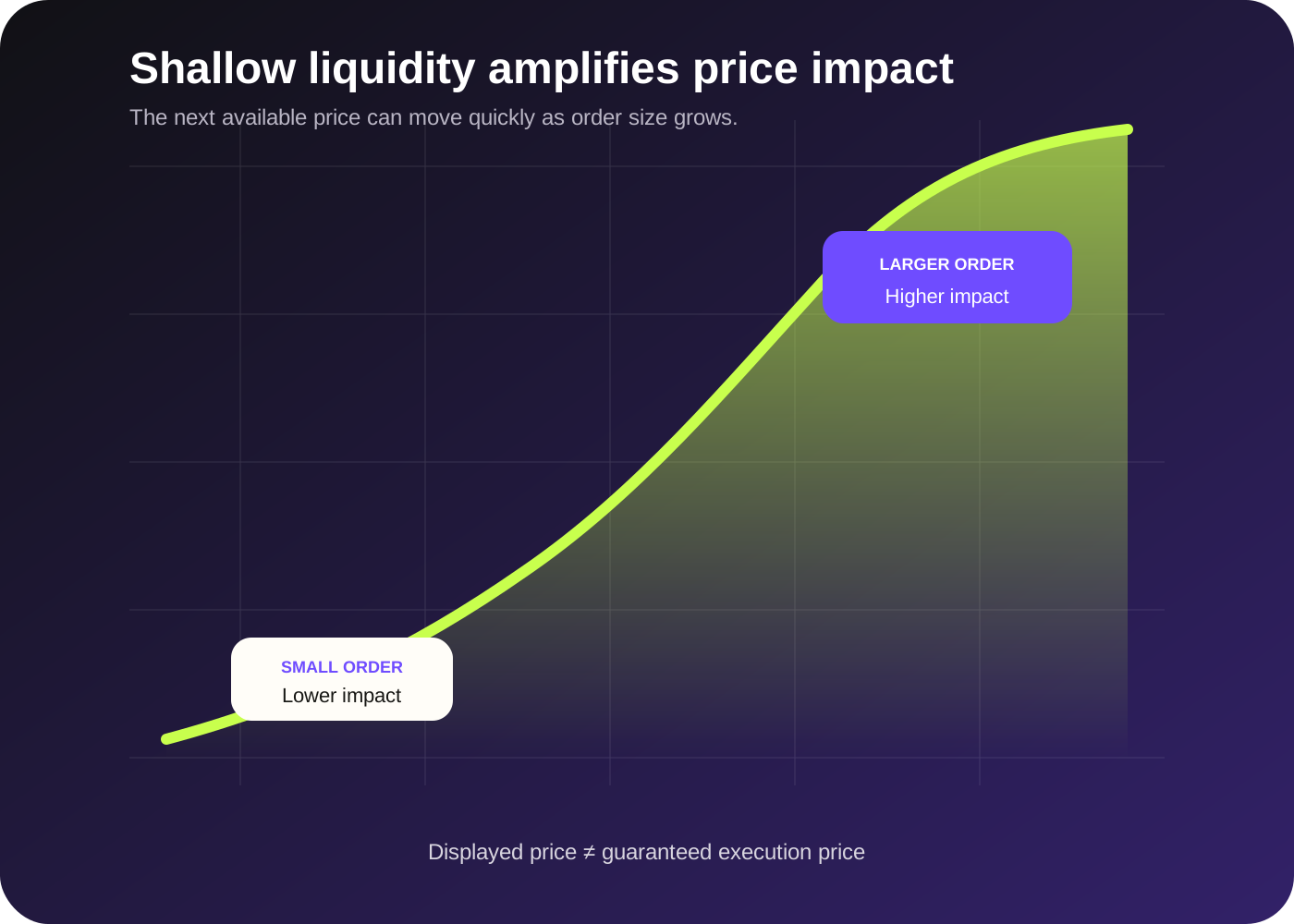
Market trackers usually display a recent or aggregated price. A real swap depends on the liquidity available along the chosen route. When pools are shallow, the effective price can deteriorate as order size increases because each part of the trade moves along the pool’s pricing curve.
Price impact, slippage tolerance and minimum received are core risk controls. They are not technical details to skip. A token can be genuine and still be difficult to buy or sell near the displayed market price.
Volume also requires context. Reported volume does not prove that a specific wallet can exit at the headline price. The relevant evidence is the quote available for the actual trade size, route and moment.
For small assets, liquidity can change faster than a static guide can be updated. Recheck it immediately before a transaction and again before assuming an exit route exists.
Correct token identification solves only one problem. The remaining risk categories should be evaluated independently rather than compressed into a single “safe or unsafe” label.
Meme-token demand can depend heavily on social momentum, exchange listings and short-lived narratives. A rapid rise does not create a durable floor.
Thin pools can produce large price impact, especially for trades that appear small in dollar terms. The visible price may not be executable.
Holder distribution, exchange wallets and connected addresses should be reviewed independently. Concentrated selling can overwhelm available liquidity.
The mint address and wallet request matter more than appearance. Phishing can occur before, during or after the token selection step.
Custody, account access, smart-contract routing and phishing risks exist outside the token itself. A correct mint does not make every platform trustworthy.
Check the date, source and scope of every claim. A review date should change only after a material recheck, not as a cosmetic freshness signal.
Stronger liquidity across several venues, transparent and stable holder distribution, clear ongoing communication, verifiable updates, reliable withdrawal support and sustained activity would provide more evidence to assess. None of those factors would eliminate volatility or make the token suitable for every reader.
Loss of liquidity, unresolved wallet concentration, inconsistent mint information, broken official links, disabled withdrawals, unexplained authority changes or promotion that obscures risk would all warrant additional caution. The absence of a warning today is not evidence that conditions will remain unchanged.
These are different questions and should be answered with different evidence.
Concise answers to the main identity, buying and risk questions. The visible answers match the FAQ structured data on this page.
Solama Coin (SOLAMA) is a community-driven meme token issued on Solana. The project presents it as the official unofficial mascot of Solana, while the token itself is identified technically by its Solana mint address.
The project currently publishes AVLhahDcDQ4m4vHM4ug63oh7xc8Jtk49Dm5hoe9Sazqr as the token mint address. Verify the full address against the official site and an independent Solana explorer before signing.
No. SOLAMA is a token on Solana. Transfers, token accounts and swaps use Solana infrastructure, and network fees are paid in SOL.
The project points users to Solana swap services including Jupiter and Raydium and has referenced centralized exchange listings. Availability, liquidity, supported jurisdictions and trading pairs can change.
The official project site states a 0% buy and sell tax. That statement does not mean a trade is cost-free because network fees, swap fees, spread, slippage, price impact and withdrawal charges may still apply.
Token verification can reduce the risk of buying a copied token, but it cannot remove volatility, liquidity, concentration, project, platform, custody or execution risk. SOLAMA should be treated as a highly speculative asset.
Yes. A name, ticker and image are not unique identifiers. The complete Solana mint address is the technical identifier that should be checked in a wallet, explorer and swap interface.
Each external citation opens in a new tab and is marked nofollow noopener. Sources are selected for the specific claim they support.
Official Solama website — project positioning, mint address, stated supply, tax claims and linked trading routes.
Solana token documentation — mint accounts, token accounts, supply and authority mechanics.
Solscan token record — an independent explorer view for the exact SOLAMA mint.
Jupiter Swap documentation — routing, execution and swap integration concepts.
Raydium swap documentation — AMM swaps, slippage and price-impact context.
CoinGecko SOLAMA market page — volatile price, volume and market context that must be rechecked.
CoinMarketCap SOLAMA market page — a second market-data view for comparison, not a permanent factual record.
Phantom wallet security guidance — common scam patterns and recovery-phrase safety.
Solama Coin belongs to the meme-token category, where attention, identity and community participation can matter as much as a conventional product roadmap. That does not make every claim meaningless, but it changes what evidence is useful. A reader should distinguish technical facts that can be checked on-chain from community claims that are qualitative, temporary or difficult to measure.
The technical layer answers questions such as which mint represents SOLAMA, how many units exist, which authorities remain active and how tokens move between accounts. The social layer includes recognition, contributor activity, listings, memes and the project’s ability to retain attention. The market layer covers available liquidity, spreads, order execution and the distribution of holdings. A complete assessment needs all three layers because strength in one does not guarantee strength in the others.
Price aggregators are useful for comparing quoted price, volume, market capitalization and historical ranges, but their figures can differ because exchanges, pools, circulating-supply assumptions and update timing differ. Compare the current CoinGecko Solama market page with CoinMarketCap rather than treating one snapshot as permanent truth.
For a small token, reported market capitalization may be much larger than the liquidity available for an immediate trade. Market capitalization multiplies a reference price by a supply figure; it does not show how much capital is waiting on the other side of an order. That is why a trader can see an apparently stable headline price while receiving a materially worse executable quote for a larger transaction.
A swap quote contains more information than the token amount shown in large type. The route, input and output mints, price impact, slippage setting, minimum received and platform fees all affect the result. Jupiter’s official quote documentation describes how its routing response uses token mint addresses, amount, slippage parameters and price-impact information. Raydium’s swap documentation provides another authoritative explanation of the trading workflow.
A quote is also time-sensitive. Pool balances can change between viewing and execution, especially during volatile periods. A cautious process checks the exact output mint, keeps slippage within a deliberate limit, reads the minimum received and rejects a transaction when the route or wallet request differs from what was expected.
Self-custody means the wallet holder controls the credentials that authorize transactions. It also means there is generally no administrator who can reverse a mistaken transfer, restore a disclosed recovery phrase or cancel an approved malicious transaction. The recovery phrase should stay offline and should never be entered into a token site, support chat, form or swap interface.
Using a separate wallet for speculative tokens can limit the amount exposed to a compromised website or overly broad approval. Before signing, confirm the connected domain, the accounts touched by the transaction and the asset being received. Disconnecting a site after use does not reverse a transaction already signed, so review must happen before approval.
Centralized exchanges change the risk model rather than removing it. They can simplify account access and trading, but users rely on the exchange for custody, withdrawals, listing continuity and operational security. A token may also be available under different pairs or not be withdrawable on every venue. Check the current pair, network and withdrawal status instead of relying on an old list of exchanges.
The checklist is designed to expose uncertainty. A blank or unverifiable answer is itself useful information.
Compare the project website, explorer and swap output mint character by character. Do not approve a substitute identified only by ticker or artwork.
Review mint and freeze authority data in an explorer and understand what the displayed state means. A single label should not replace an on-chain check.
Separate exchange or pool wallets from likely individual holders where possible, and avoid assuming that every large address represents one independent investor.
Compare quotes at several realistic sizes without signing. Rising price impact can reveal that the visible headline price is supported by limited depth.
Check publication dates and distinguish official project statements from explorer data, market-aggregator estimates and third-party commentary.
High volatility, operational mistakes and liquidity failure can combine. Position sizing is a personal risk decision, not a property of the token.